Battle of Dien Bien Phu
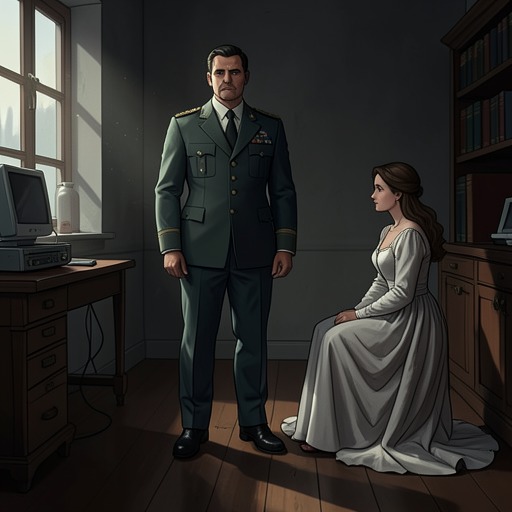
Man on FireThe Battle of Dien Bien Phu is presented through both its cost to the French Foreign Legion and Creasy’s personal memory of defeat and captivity. The battle’s significance extends beyond the battlefield: it helps explain the Legion’s postwar condition and resurfaces in a quiet conversation with Pinta, when Creasy finally describes the scars on his hands.
Background and Cost
The Legion was reconstituting itself after the shambles of Vietnam and the Battle of Dien Bien Phu. Several thousand Legionnaires had been captured there, and more than fifteen hundred had been killed. The account places the battle within the Legion’s history of last-resort deployments and futile battles, making its losses part of a wider pattern rather than an isolated setback.
That defeat also forms the background to the Legion Creasy later serves in. The force is described as rebuilding with modern equipment and techniques, while its own institutional identity supplies a purpose beyond the national loyalties its members have left behind. The battle is therefore both a military catastrophe and a defining rupture in the Legion’s recent history.
Creasy’s Capture and Survival
Creasy was captured at Dien Bien Phu. After nine months in a Viet Minh prisoner-of-war camp, he returned to active service and became the sergeant of B Company in the 1st R.E.P. His later position as a decorated veteran thus begins in the defeat the Legion is still recovering from.
In his recollection, surrender is followed by humiliation and a forced march of three weeks to a prisoner-of-war camp. The march reduces survival to the repeated effort of dragging one foot after the other: food is scarce, men die, and guards shoot those who fall and cannot get up. Creasy remains standing. He also carries a young wounded officer on his back, an act of endurance and aid within a journey defined by exhaustion and death.
Interrogation and the Mark on His Hands
Survival does not end Creasy’s ordeal. At the camp, a Vietnamese captain questions him across a wooden table. Creasy refuses to answer, signalling his refusal with a shake of the head. The captain smokes Gauloise cigarettes and repeatedly extinguishes them on the backs of Creasy’s strapped-down hands, leaving the mottled scars that remain visible years later.
The memory returns after Pinta touches one of those hands and asks what happened. Creasy does not jerk away as he once would have. Instead, he looks down at the scars and recalls the interrogation, then gives Pinta a restrained account of the smoker and the absent ashtray. The battle’s consequences emerge in that small exchange not as a general report of defeat, but as an injury carried on his body.
The Recalled Event and Its Aftermath
The battle is narrated through Creasy’s memory, prompted by Pinta’s question in the present. His account moves from capture to forced march, camp, and interrogation, linking the military defeat to the intimate physical evidence it left behind. Pinta understands what his brief explanation implies; tears fill her eyes, and she remains silent. The scene makes the act of telling consequential: Creasy allows another person to witness an experience he had kept behind the visible scars.